Modern manufacturing practically does not exist without robotics and automation. And this is not the peak of what technology can do: new innovations keep appearing and setting the direction of change, for example even closer communication between the parts of a puzzle as complex as industrial production. How do you integrate such different mechanisms and systems effectively? With a modular edge gateway.
The ongoing Industry 4.0 revolution
Robotics and automation bring huge benefits: they let you control the scalability and repeatability of a process and therefore maintain the quality of the end product. The fourth industrial revolution, or “Industry 4.0”, goes a step further and bets on full integration and digitalisation, including IoT, the cloud and AI. This in turn enables real-time monitoring and analysis of practically every parameter of machines, devices, their surroundings and the processed material.
All this data has to be aggregated, processed and delivered to the end user through a specific IT infrastructure. Whatever its topology and use, that infrastructure has to be reliable in terms of performance, link stability and security.
Industrial infrastructure with an Anduril edge gateway
This is where Voyager technology comes in. Its mobility, resilience and flexibility fit the needs of modern industrial plants well.
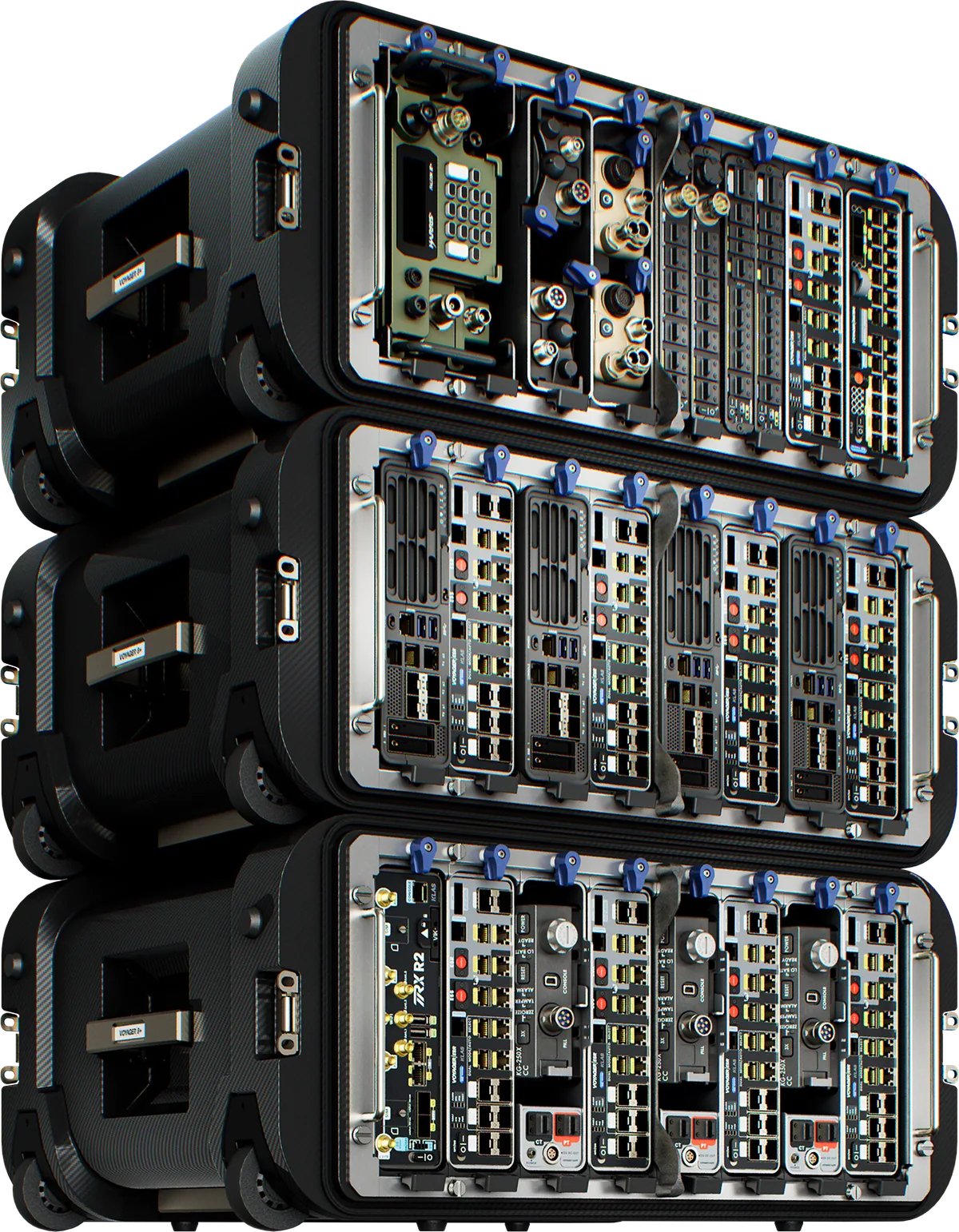
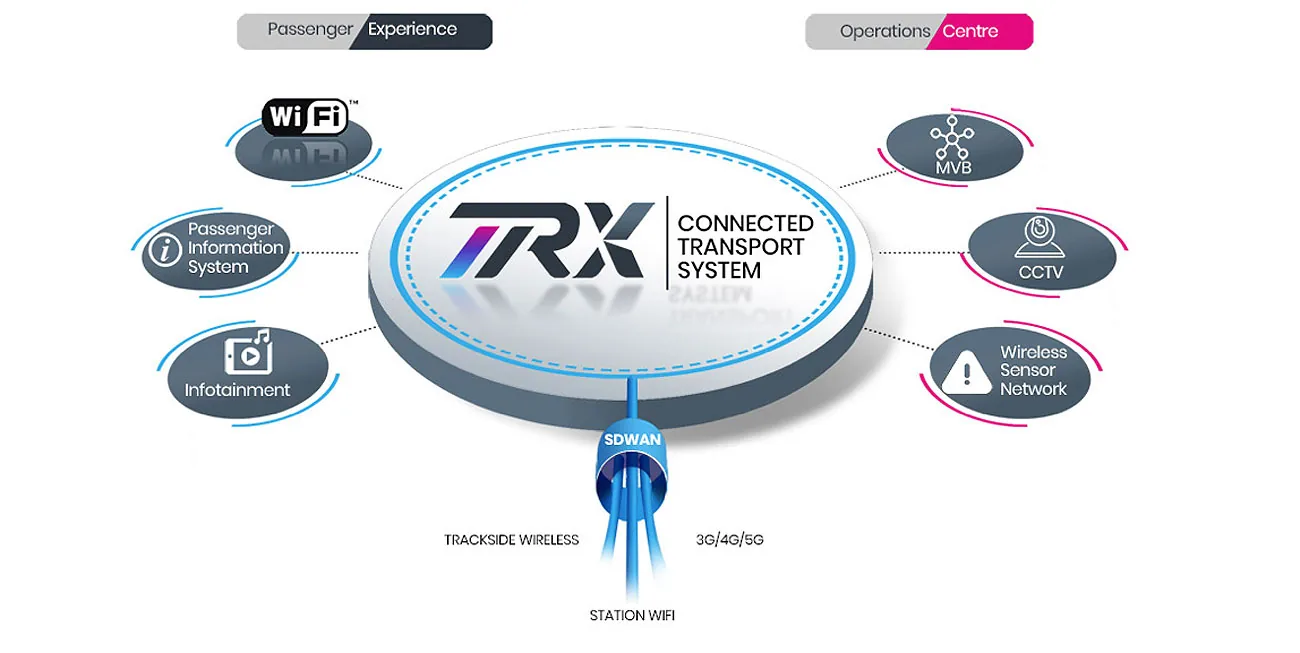
Distributed production environments, real-time monitoring, integrating data from thousands of IoT sensors: all of this requires edge gateways that are operationally reliable on the one hand and meet industrial equipment standards on the other, being resistant to adverse temperatures and mechanical damage. TRX modules and Voyager mobile systems process and transmit data at the edge of the network (edge computing), which increases the efficiency, security and operational resilience of industrial plants.
Voyager hardware can work as an independent network node in hard-to-reach parts of a plant, as a mobile data centre supporting production, or as a secure access and monitoring point for IoT installations, SCADA systems or autonomous robots.
Four IoT protocols in industry and how to integrate them with Voyager modules
Since the idea of Industry 4.0 is to integrate many different devices that record different parameters, it is worth looking at the protocols most often used in practice and how to integrate them with Voyager modules. The list is subjective.
MQTT (Message Queuing Telemetry Transport)
A lightweight communication protocol based on TCP and the publish/subscribe pattern: clients receive messages from specific channels through a broker. Its main advantage is low power and bandwidth use. Typical examples are IoT sensors for temperature, humidity, noise and lighting.
- Input
- Wi-Fi, LTE, Ethernet
- Setup
- TRX as an MQTT broker or client, local data processing on a server running Keel
- Use
- local storage, analysis and forwarding to headquarters over SD-WAN/VPN
Modbus RTU, TCP, ASCII
A client-server protocol for exchanging information between industrial automation devices, available over serial transmission and over TCP/IP on port 502, among others. Examples are electricity meters and differential pressure, temperature and humidity sensors.
- Input
- Modbus TCP directly over Ethernet or over a VPN on LTE
- Setup
- TRX running Keel as master, slave or data logger
- Use
- local processing, anomaly detection, data transfer to the cloud
CAN (Controller Area Network)
A fast, interference-resistant serial bus protocol for real-time communication between electronic devices. It was created for the automotive industry and is now widely used in Industry 4.0, automation and robotics. Examples are acceleration and tilt sensors and engine pressure sensors.
- Input
- CAN port with a CAN-to-Ethernet adapter, or a gateway with CAN → IP conversion
- Setup
- TRX over Ethernet with local processing
- Use
- real-time recording of parameters, e.g. in vehicles (jump server)
RTSP (Real-Time Streaming Protocol)
An application protocol for controlling real-time audio and video streaming. It lets a client play, pause and seek material streamed from a media server. It is used mainly in monitoring systems and thermal imaging.
- Input
- Ethernet or Wi-Fi, RTSP transmission
- Setup
- TRX as a stream recorder or relay, e.g. to headquarters over VPN/SD-WAN
- Use
- local recording or video analysis at the edge of the network