First: “it depends”, the most honest answer
Let's start with the most frequently repeated truism: there is no truer answer to a question like this than the famous “it depends”. It depends on current (and future) needs and use cases, on organisational and financial resources, and on the scale of the operation. Truism no. 2: there are no universal solutions that are ideal for every use case.
So the aim of this article is not to list the differences between the two solutions and crown a winner. We want to point out that choosing a data centre model has concrete consequences that significantly affect an organisation's operational capabilities.
The Anduril mobile edge solution
An edge server is the foundation of edge computing: a data processing model in which computation and analysis happen as close as possible to where the data is created, at the “edge” of the network, instead of in a central cloud or classic on-premise infrastructure. Many vendors offer this kind of hardware, but in our view Anduril's Voyager solutions deserve special recognition:
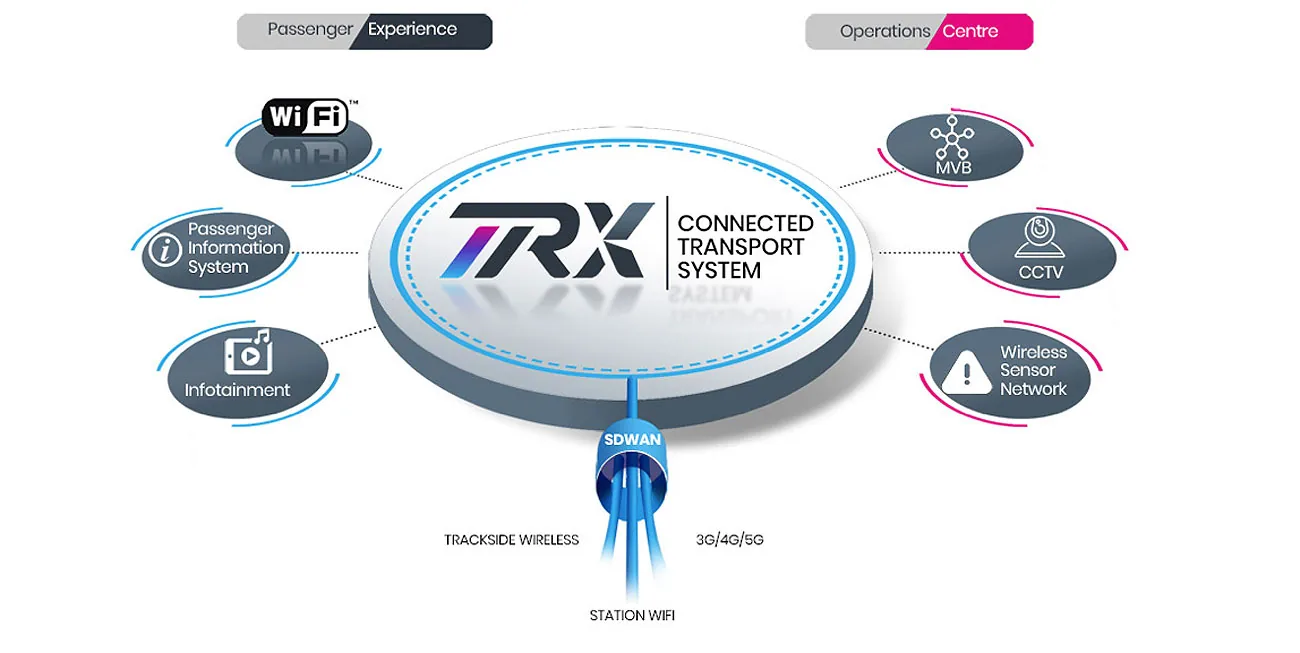
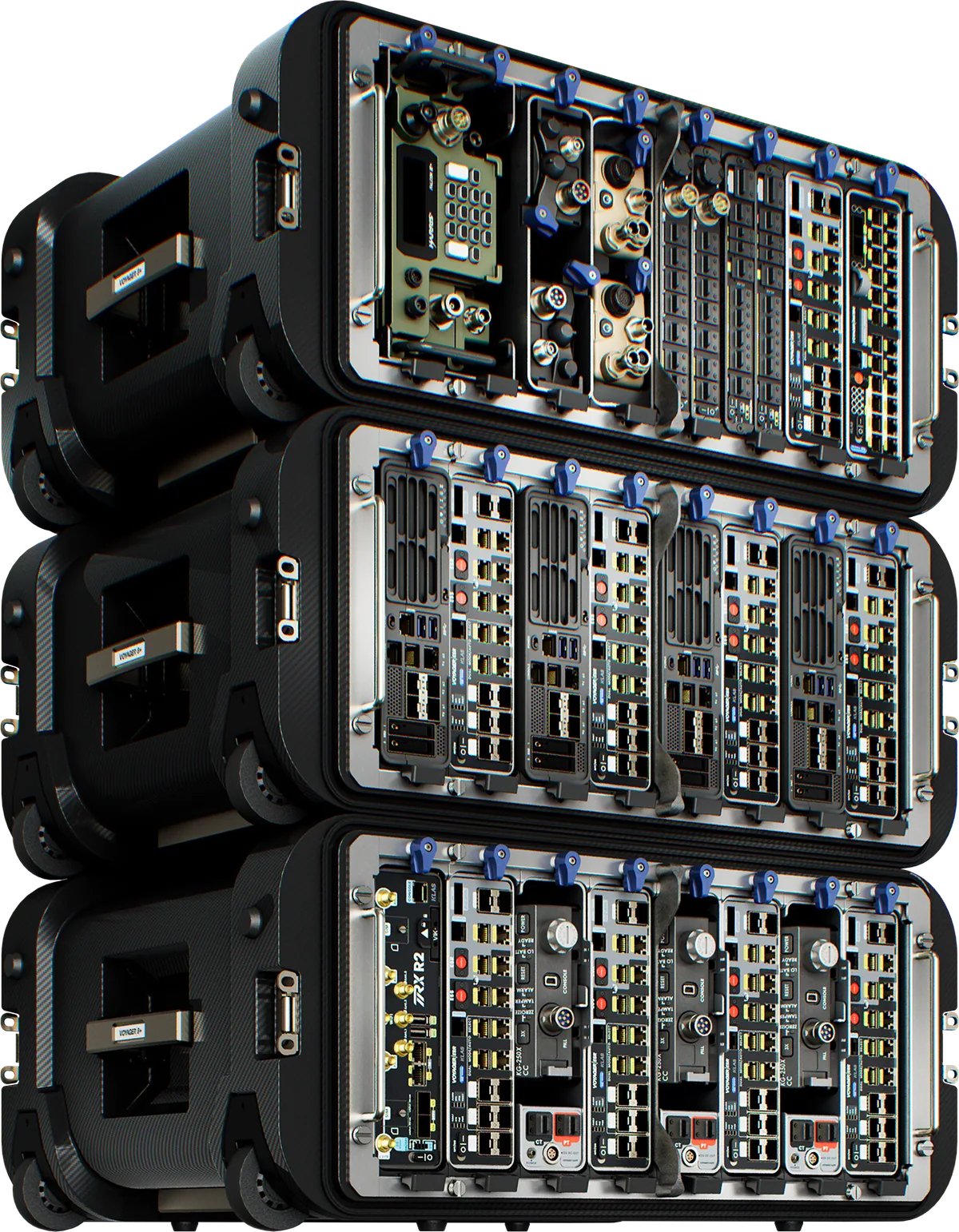
- What makes this technology unique is above all the compact size of the modules, combined with computing power, link throughput, protocol support and storage capacity usually associated with much larger “classic” servers, routers or storage arrays. For example, the TRX connectivity module offers LTE, 5G (SIM card slots), Wi-Fi, Ethernet, GPS and SD-WAN. The NAS module has 8-core Intel Xeon or Atom processors, 48 GB of RAM and up to 240 TB of storage.
- Everything fits into the Voyager system of mobile cases, which can hold any selection of modules. The cases are fully rack-compatible and can be mounted not only in a server room but also in wheeled vehicles, boats and other non-standard locations. A fully equipped case weighs less than 40 kg and can travel in an aircraft hold. It has wheels and a telescopic handle and looks like a classic tower PC.
- Voyager hardware is “rugged”: a military build standard means resistance to extreme weather and terrain. For operational continuity this makes it reliable and stand out from traditional devices of this type. Many modules need no dedicated cooling, and practically all of them can run on external battery power. In short: mobility, mobility and more mobility.
Edge modules can complement a traditional data centre, in particular as a fully portable data backup. They also work as a standalone field station when stable communication is needed in remote, non-urbanised locations or in areas affected by disasters and other events that have damaged local infrastructure.
With this solution you get a product with well-defined parameters that is practically ready to use. Configuration is simple: many modules have a slot for the Voyager Ignition Key (VIK), an NVMe card that stores the configuration as an Ansible playbook to be deployed on site. The modules scale with your current needs.
Container server rooms
Container server rooms are another answer to the need for data processing in the field. As the name suggests, this is a classic server room built into a specially adapted shipping container that provides space for the equipment, power, backup power and cooling. It works well for temporary field projects.
- A characteristic requirement is organising and securing a physical site. A container server room needs stable ground with an area of a multiple of a 20- or 40-foot container (about 14 m² or 28 m² respectively). Inside there must be room not only for the IT infrastructure but also for all the equipment that supports it. Still, an area the size of a small studio flat lets you place a large number of servers in one location, which is an undeniable advantage.
- Transport logistics can be a challenge for organisations that need to relocate the server room from time to time. Without their own technical resources they will need a specialist external company.
- Time to launch also matters. According to publicly available sources it takes about 2–3 months from design to installation on site. That is much faster than building a “traditional” data centre.
The initial investment and running costs of a container data centre will be higher than for a mobile edge solution. In return you get much more equipment in one go, although scalability is still limited by the available space and further running costs.
Container server rooms are an interesting way to deploy IT infrastructure for temporary field projects. Their main advantage is the ability to deploy a large amount of computing power at once. Keep in mind, however, the limits on further expansion and the costs that come with it.
Summary
Container data centres and mobile edge solutions each have their own use cases, but mobile edge stands out for flexibility and immediate readiness. It is more mobile, available faster and more practical in an unstable or changing environment.
Container server rooms are a better fit for projects that need a lot of power and infrastructure in one place for a longer time. They do, however, require securing a site, a longer deployment (2–3 months) and higher, ongoing costs of maintenance and any relocation.